Serving Charlotte & surrounding areas

Fence Staining in Charlotte, NC

We bring weathered wood fences across the Charlotte metro back to life — washing, staining, and sealing every board so it shrugs off Carolina sun, humidity, and afternoon downpours, and matches the deck it stands beside. Straightforward, written quotes, no pressure.

  • Wood fence specialists
  • Quality craftsmanship
  • Upfront written quotes
  • Local & responsive

Get Your Free Quote

Tell us about your fence and we'll get right back to you. No pressure, no obligation.

Charlotte's fence staining specialists

Your fence weathers the same Carolina seasons as your deck

A wood fence lives outside every hour of every day, with no roof over it and nothing to break the weather. Around Charlotte that means relentless sun on both faces, sticky summer humidity, a spring dusting of pollen, and afternoon storms that soak every board through. Left bare, even a well-built privacy or picket fence turns gray, rough, and brittle far sooner than most homeowners expect.

Charlotte Deck Staining Co. cleans, stains, and seals wood fences throughout the metro — reviving faded boards and locking in a finish that holds. And because deck staining is the core of what we do, we can tone your fence to match the deck beside it, so the whole backyard reads as one finished space rather than a patchwork.
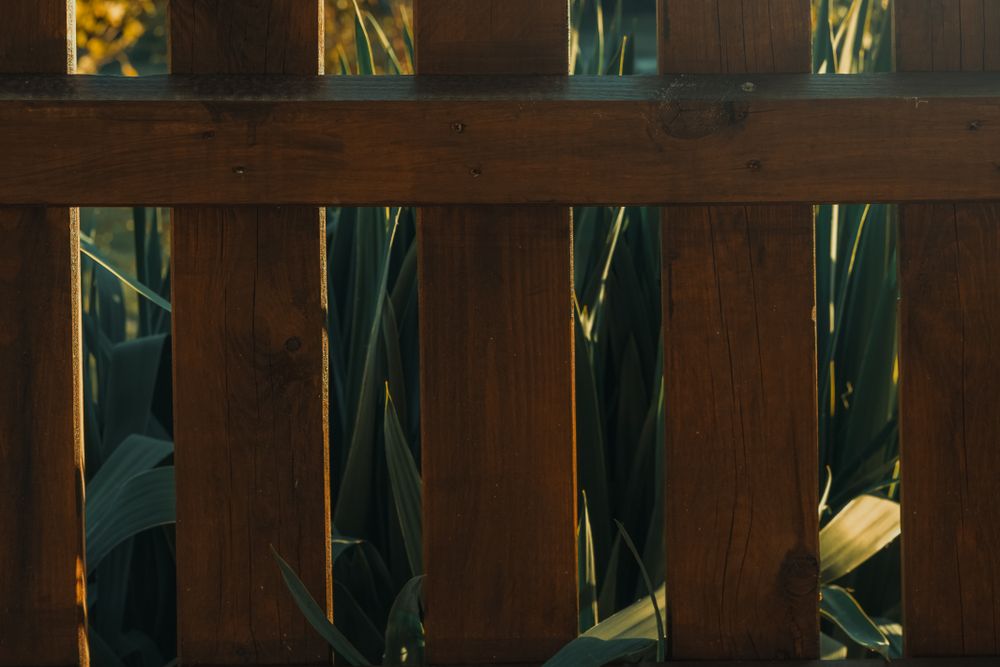
A warm, freshly stained wood picket fence in a backyard garden

Our Fence Staining & Sealing Services

Whether your fence needs a straightforward refresh or a full revival, we cover the entire project start to finish — washing and prep included.

Fence Cleaning & Prep

Every lasting finish starts on a clean, sound surface. We wash off the gray, oxidized layer along with mildew, pollen, and any peeling old coating, then give the wood time to dry fully before any stain touches it. On older fences we brighten the boards to even out the tone first.

Fence Staining

We apply a quality penetrating stain that soaks into the grain, deepens the color, and carries the pigment that shields each board from the sun. You pick the tone — from a light, natural cedar to a rich, warm brown — and we lay it on evenly across pickets, rails, and posts.

Fence Sealing

Stain handles color and UV; a water-repellent sealer handles moisture. A good seal stops rain and damp air from being drawn into the grain, where trapped water drives the swelling, warping, and rot that destroy a fence from the inside. On most jobs we stain and seal as one system so you get both at once.

Weathered-Fence Restoration

If your fence has already gone silver and rough, it isn't a lost cause. We strip or wash away the failed finish, sand back splintered spots, address the worst boards, and rebuild the finish from the wood up so the fence looks cared-for again instead of replaced.

Not sure what your fence needs?

Describe what you're dealing with and we'll tell you straight whether it's a full refinish or just a maintenance coat — in writing, no obligation.

Get a Free Quote

Types of Wood Fences We Stain

Different fence styles have different trouble spots. Here's how we approach the most common ones around Charlotte.

Privacy fences

Tall, solid board fences are the most common style around Charlotte — and the most satisfying, because there's so much surface to transform. We stain both faces so the side your neighbor sees looks as sharp as yours.

Picket fences

Classic pickets have a lot of edges and exposed end-grain — exactly the spots where water sneaks in first. We work the stain into every picket top and gap so the protection is complete, not just skin-deep.

Board-on-board & shadowbox

Overlapping and shadowbox designs look great but hide faces and tight overlaps. We take the time to reach the lapped areas that quicker jobs skip, so the whole panel is protected.

Split-rail & ranch

Open rail fences have fewer boards but big, fully exposed beams that take the sun's full force along their length. A good stain keeps them from checking and graying out in the open.

A different style, or a mix?

Have a fence type not listed here, or several around the property? Tell us what you've got and we'll tell you how we'd handle it.

Ask About Your Fence

Why Stain a Wood Fence?

A fence is one of the most exposed structures on your whole property. A good stain-and-seal earns its keep several ways at once.

  • Slows graying & blocks UV

    Bare wood turns gray because sunlight breaks down the fibers at the surface. Stain carries pigment that absorbs UV before it can do that, holding your fence's color far longer. Because a fence catches sun on both faces, it can fade even faster than a shaded deck.

  • Repels moisture & prevents rot

    Sealed wood sheds water instead of drinking it in. That matters most at the bottom of the boards and around the posts, where ground contact and splashback keep the wood damp and rot quietly gets its start.

  • Discourages mildew

    The same dampness that feeds rot also feeds the black and green mildew you see creeping up shaded sections. Take the moisture away and the wood becomes far less hospitable to it.

  • Extends the life of the fence

    Replacing a fence is a major expense. Staining is a small, periodic cost that pushes that day years down the road and keeps the fence you already paid for doing its job.

  • Curb appeal — and a match for your deck

    A crisp, evenly stained fence frames the yard and lifts the look of the house from the street. Toned to complement your deck, it turns the backyard into one cohesive, finished space.

Why Charlotte Fences Need Staining

Our weather is hard on any outdoor wood, and a fence catches more of it than almost anything else on the property — standing in the open, exposed on every side, often with its feet in the dirt.

Sun on both faces

Unlike a deck lit mostly from above, a fence takes direct sun on both sides as it tracks across the sky. The runs facing south and west fade first, and a single hot Charlotte summer can leave them badly washed out.

Humid summers feed mildew

Long, muggy summers keep the shaded base of a fence damp for days at a stretch — exactly the conditions mildew needs to take hold and climb the boards.

Spring pollen film

Spring blankets the Carolinas in pollen, and a fence's tall, ridged face grabs and holds that gritty yellow film where rain can't always rinse it away. We pressure wash every board back to clean wood first — stain laid over a pollen-caked surface simply won't grip.

Storm-driven rain

Charlotte's heavy afternoon storms drive rain straight into the face of a fence. Unsealed boards soak it up and swell, then shrink and split as they bake dry under the next afternoon's sun.

Freeze-thaw at the grain

Charlotte winters seesaw across the freezing line all season, and the dampest part of a fence sits down low where the boards meet the soil. Moisture trapped there freezes, swells, and splits the grain a little wider with every cold snap.

And the posts sit in the ground

Fence posts and the bottom of the boards live closest to the soil, where wicking moisture and splashing rain keep them wettest — and where rot most often begins. Sealing gives that vulnerable zone real protection.

Choosing the Right Fence Stain

Like deck stains, fence stains come in three families — and each strikes its own balance between showing the wood grain and protecting it. We'll help you weigh them on the estimate.

Transparent / Clear

A barely-there tint that lets the cedar or pine grain read right through — the most natural finish of the three. With the least pigment in the can, it's also the first to wash out on a fence that takes sun front and back, so plan on a quicker recoat cycle.

Best for: newer fences, shaded runs, or anyone who loves the raw-wood look and doesn't mind refinishing sooner.

Solid

A fully opaque coat that buries the grain and evens out a fence whose boards have aged unevenly or been patched over the years. It carries the most pigment, so it guards against sun and weather the longest — just know that switching back to a see-through finish later means stripping it off.

Best for: older or repaired fences, or anyone who wants one uniform color from end to end.

Which one's right comes down to your fence's age, the wood it's built from, how much sun the run takes, and the finish you have in mind — we'll lay out the options before any work begins.

Our Fence Staining Process

Most of what makes a fence finish last — or fail — happens before the color ever goes on. Here's the order we work in.

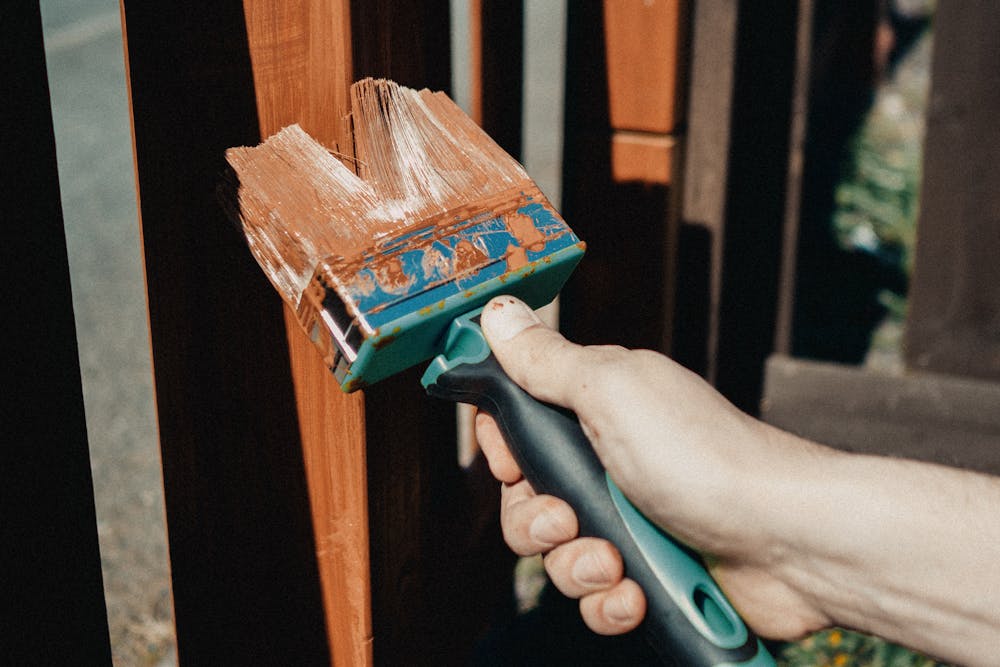
Applying a fresh coat of stain to a wood fence with a brush
  1. 1

    Inspect & quote

    We start with a walk-around — looking over the boards, posts, and gate hardware and talking through the color you have in mind — then hand you a written quote with the scope and price spelled out. No guesswork.

  2. 2

    Clean & prep

    We wash off the gray surface layer, mildew, and pollen, brighten the wood where it helps, and then let the boards dry down to the right moisture level. We won't open a can of stain over damp wood — coating a fence before it's dry is the fastest route to a finish that flakes.

  3. 3

    Minor repairs

    We tighten loose pickets and popped fasteners and call out any boards or posts that need repair before they're coated — we'd rather fix a problem than seal a fresh finish over it.

  4. 4

    Stain & seal

    Your chosen stain and sealer go on next, worked into both faces, the picket tops and end-grain, and around the posts — the edges where weather always finds its way in first.

  5. 5

    Final walkthrough

    We tidy the site, do a final walk of the fence together, and let you know when it's fully cured and how to keep it looking sharp.

Matching Your Fence to Your Deck

A fence and a deck sharing one backyard look their best when they speak the same language. Because we handle both, we can stain your fence in a tone that complements — or deliberately contrasts — your deck, instead of leaving you to guess at matching products on your own.

If your deck could use attention at the same time, it's often more efficient to tackle the two together. Learn more about our deck staining service, take a look at the Charlotte climate challenges that wear both down, or just ask about a combined deck-and-fence quote when you reach out.

Signs Your Fence Needs Staining

A fence usually shows it's overdue well before it gives out. Here's what to watch for.

  • Graying or fading color

    When the boards turn silvery-gray or look washed-out, the sun has burned past the finish and is now bleaching the bare wood underneath.

  • Water no longer beads

    Flick some water at the boards — a healthy finish makes it bead and run off. If it darkens and soaks straight in instead, the seal has worn through.

  • Mildew or dark spots

    Green or black blotches creeping up the shaded base of the fence are a sign damp has settled into the wood and mildew is taking hold.

  • Rough or splintering pickets

    Fuzzy fibers, lifting splinters, and a dried-out feel along the pickets all say the wood's surface is starting to go.

  • Peeling or flaking finish

    Once the old stain or paint starts curling and flaking away from the boards, it's no longer protecting anything and has to be stripped back before a new finish can go down.

  • Seeing a few of these?

    A maintenance coat now is far cheaper than a full restoration — or a new fence — later. Let's take a look.

Fence Staining FAQs

Ready to refresh your fence?

Tell us about your fence and we'll put together a free, no-obligation quote — what we'd do, in what order, and what it runs — in writing before any work starts.

Call Now Free Quote